

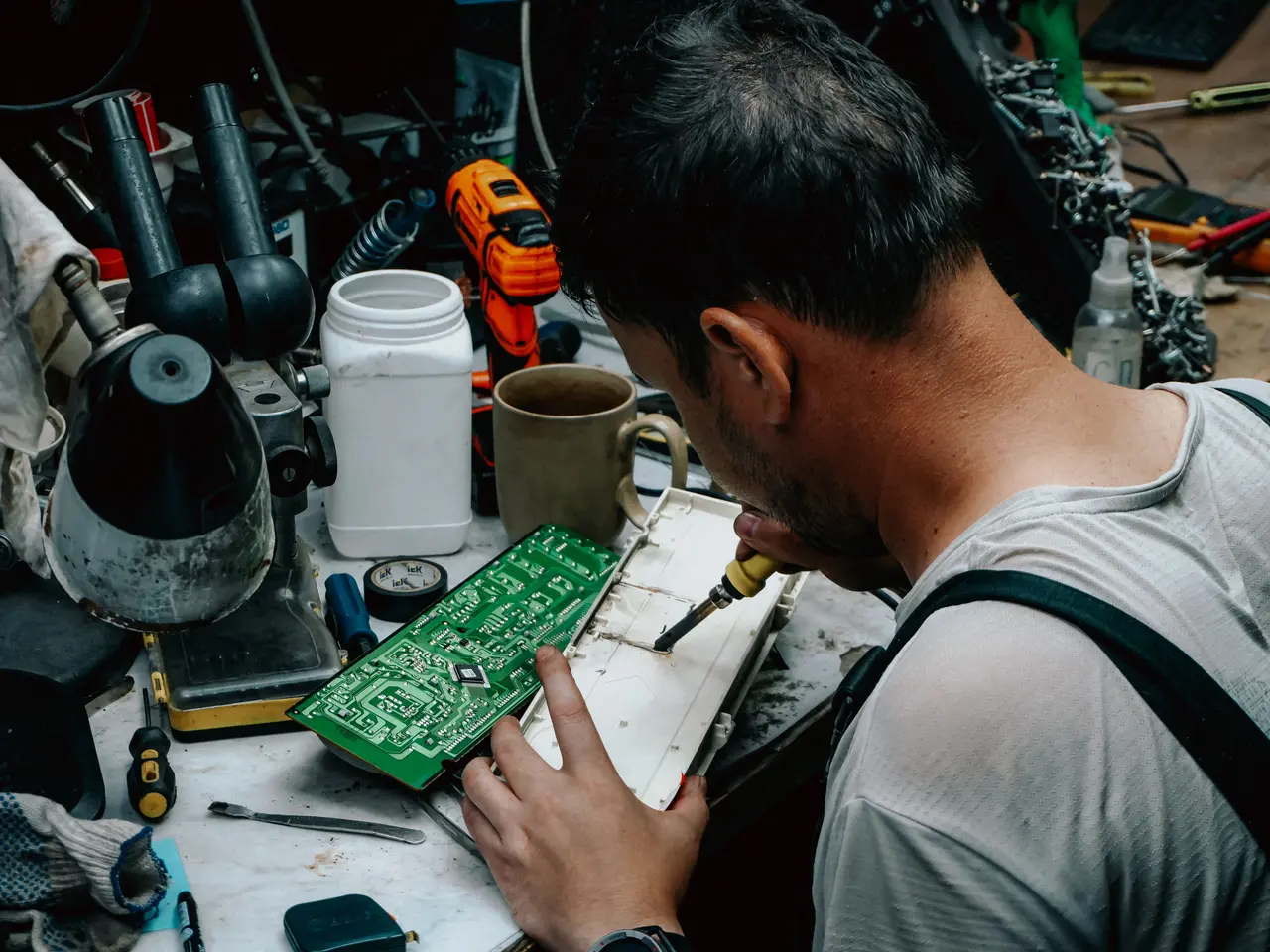
Technician carrying out close inspection of an industrial printed circuit board

Our engineering approach

Engineering-Led Repair & Refurbishment

Industrial electronics repair requires more than replacing the component that failed. CIE takes a structured approach to inspection, diagnosis, repair, refurbishment and verification, with the aim of returning equipment in a condition suitable for further service subject to the application and the responsible equipment operator or contractor.

A defined process

Understand the equipment before deciding the work.

The appropriate scope depends on the equipment, its condition, available technical information and the functions that can be reproduced safely away from the complete machine.

CIE explains the work at a useful level while keeping detailed diagnostic methods, test arrangements, thresholds and internally developed technical knowledge confidential.

Assessment, diagnosis, repair

A structured route from reported fault to defined work.

01

Initial assessment

Incoming equipment is visually and electrically assessed to understand its condition, the reported fault and whether a repair route appears feasible.

  • External condition and contamination
  • Connectors, terminals and physical damage
  • Signs of overheating, moisture or corrosion
  • Previous repair work and visible component damage
  • Equipment identification and configuration
02

Fault investigation

The reported problem is investigated using electronic diagnostic techniques appropriate to the equipment. The objective is component-level understanding, not automatic replacement of a complete board.

  • Circuit-level investigation and electrical measurements
  • Signal and functional-area investigation
  • Power-supply and control assessment
  • Semiconductor, passive-component and interface assessment
03

Repair

When the cause of failure has been identified, defective components or assemblies can be repaired or replaced where technically and commercially appropriate.

  • SMD and through-hole component replacement
  • Semiconductor and passive-component replacement
  • Relay or electromechanical component replacement
  • Connector repair, soldering and rework

Preventative scope

Repair solves the fault. Refurbishment looks beyond it.

Repairing an immediate failure and refurbishing ageing electronics are not necessarily the same thing. Where appropriate, selected ageing or wear-sensitive components may be addressed alongside the primary repair when their age, condition or service characteristics present a reliability concern.

Depending on the equipment and agreed scope, refurbishment may include:

  • Electrolytic capacitors and selected optoelectronic components
  • Relays and selected electromechanical components
  • Cooling components and thermal interface materials
  • Damaged or degraded connectors
  • Cleaning and contamination removal

Refurbishment is not blanket component replacement. Its scope depends on the equipment, condition, age, application, component availability and customer requirements.

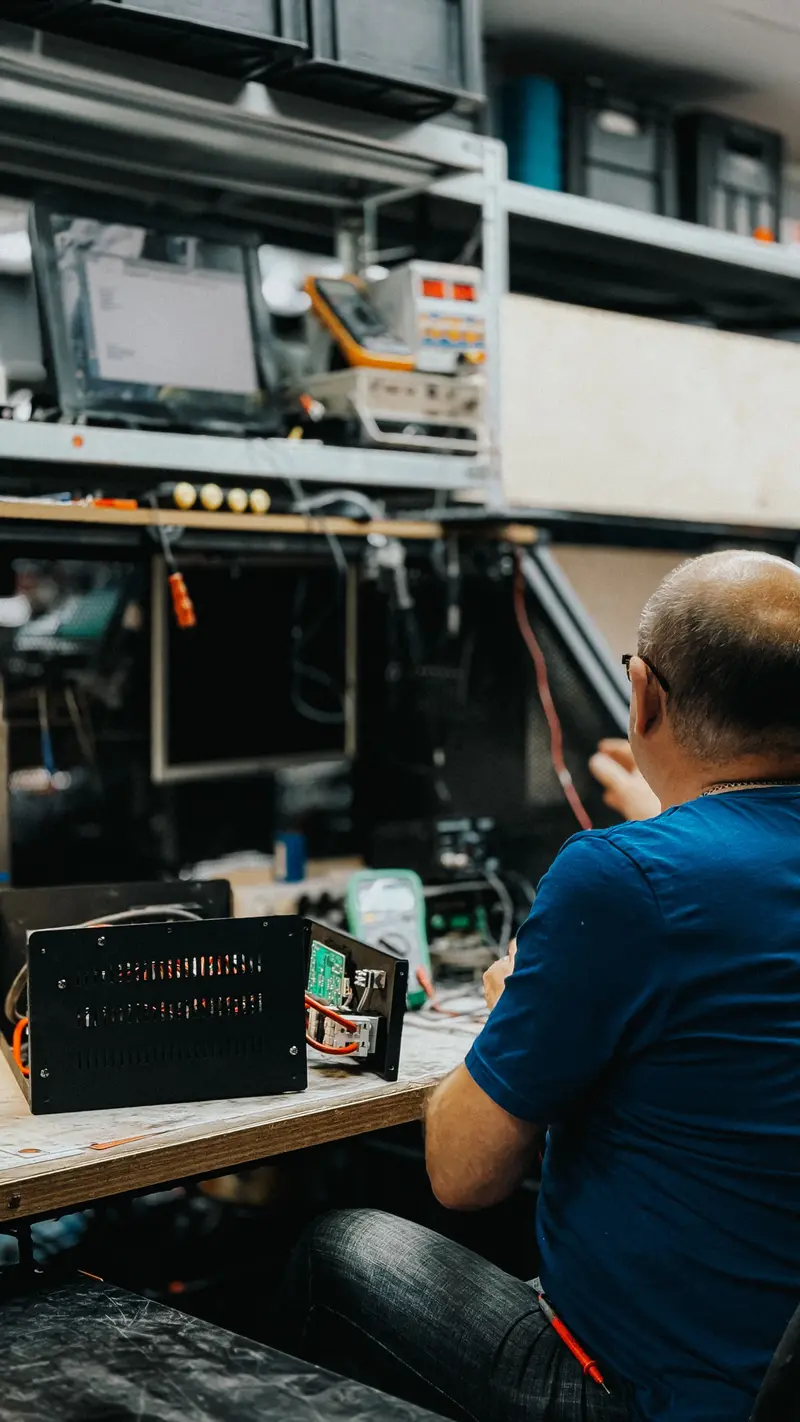
Organised industrial electronics workshop used for inspection and bench verification

Verification before release

Relevant functions checked within a stated test scope.

Following repair or refurbishment, relevant electrical functions are checked using appropriate bench-test methods and test arrangements developed for the equipment concerned.

The exact verification scope varies according to the equipment, available interfaces and the extent to which functions can safely and realistically be reproduced away from the installed machine.

Power-supply verificationControl-circuit checksDrive-stage checksSwitching and gate-drive verificationInput/output interface checksRelay and control-function checksStatic electrical checksFunctional bench testing

Documentation & traceability

Documented work, not only a generic “repaired” label.

For suitable repair and refurbishment work, CIE can provide documentation identifying the equipment, the work performed and the relevant verification completed.

01 Equipment identification02 Internal job/reference number03 Condition assessment04 Work performed05 Major components replaced06 Relevant checks completed07 Final status08 Photographs where appropriate

Clear technical boundaries

Repair feasibility is assessed, not assumed.

Credible engineering includes recognising where reliable or economical restoration may not be practical.

  • Some equipment may be beyond economical repair.
  • Severe fire, corrosion or moisture damage may prevent reliable restoration.
  • Destroyed PCBs or housings may depend on donor parts that are unavailable.
  • Obsolete or restricted components can make a repair impractical.
  • Bench verification cannot always reproduce the complete installed system.
  • Suitability for a safety-critical installation remains subject to the responsible qualified contractor or organisation.

Equipment scope

Examples of equipment CIE may be able to support.

Capability is assessed against the exact equipment, condition, available information and required scope; the categories below do not imply universal repair coverage.

01

Elevator & lift electronics

  • Elevator drives
  • Inverter assemblies
  • Control PCBs
  • Power and interface boards
  • Obsolete electronic assemblies
02

Industrial drives & motor control

  • Variable-frequency drives
  • Inverter power stages
  • Control electronics
  • Motor-drive assemblies
03

Industrial control electronics

  • Industrial PCBs
  • Power supplies
  • Automation modules
  • Control assemblies
  • Interface electronics

Technical enquiries

Discuss a repair with an engineer-led team.

Send the full manufacturer and model details, the reported fault and clear photographs where available. CIE will review whether an assessment route is appropriate.

Request a Repair Assessment